
By Mathew Bigelow, VP, Product – Logistics Solutions, Ziing
Nobody knows where diesel will be in six months, but everybody knows the federal fuel tax comes back in the New Year. The suspension returns the tax at half rate on February 1 and in full on April 1, on top of diesel prices that have climbed through most of this year. None of that is within a fleet operator’s control. What is: how many kilometres the network drives to make the same deliveries.
Why negotiating the price only solves half the problem
When fuel rises, the reflex across the aftermarket is to manage the price: renegotiate surcharges, cap fuel exposure in contracts, pass the increase down to shops and insurers. But fuel cost is a price multiplied by a distance. Most of the effort goes into the price, while the distance is treated as fixed. It rarely is.
Three numbers that reveal where distance hides
How far does the network travel for each delivery? Divide a month of total kilometres by total deliveries, then compare your best route with your worst. In the networks we’ve redesigned, the widest gaps usually trace to special requirements carried over from older agreements: a fixed drop time, a stop that must come first, a rule written for one customer years ago. Each made sense when it was agreed. Together, they can bend an entire route around a handful of stops.
How often do routes change once the day begins? Cancelled orders, urgent hot-shots, road closures and driver absences are part of every operating day. On a route that can’t adjust, each one adds kilometres. If very few routes are re-planned after trucks leave the dock, last night’s rigid plan is shaping the day more than actual conditions are.
How much of the distance is driven empty? Return legs, repositioning between runs and trips for a single urgent part all add distance without moving product. Few fleets measure it, yet each empty kilometre burns the same fuel as a loaded one.
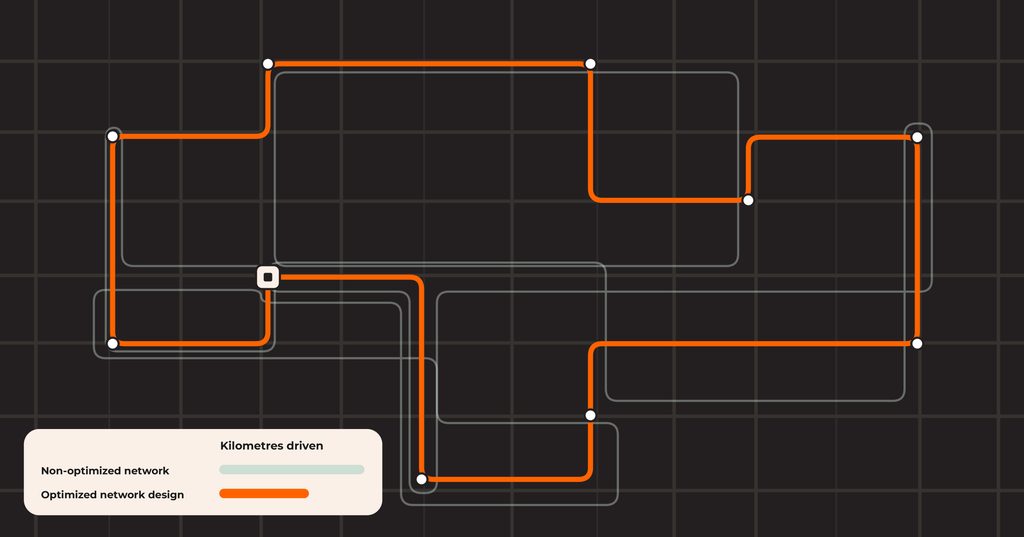
Why network design beats negotiation
None of these can be fixed through procurement. They reflect how a network was designed, often years ago, when the branch network, customer base and SLA’s looked different. Rising fuel prices don’t create these inefficiencies, but they make them more expensive to carry.
Delivery windows deserve the same scrutiny. When every customer wants parts first thing in the morning, more trucks run thinner routes and kilometres per stop climb. Not every part needs that window. Moving those that can wait lets fewer trucks run denser routes.
When the federal fuel tax returns in full, it adds four cents a litre. Cutting kilometres by five per cent saves about ten cents a litre at today’s prices, more than double the tax, and the saving lasts after prices ease.
The benefit goes beyond fuel. Fewer kilometres per stop means more reliable delivery windows, and parts that reach the shop before a bay sits idle.
Fuel will stay unpredictable. The network that moves parts through that unpredictability is a design choice, and it can be revisited. The distributors that come through this cycle strongest will be the ones that stopped asking only “what are we paying per litre?” and started asking “how many litres should this network need?”
Fuel prices are out of your hands. Your three numbers aren’t. Send them our way, and Ziing will show you how many kilometres (and litres) your network is carrying that it doesn’t need to. Contact Ziing today.
This article has been created in partnership with Ziing.